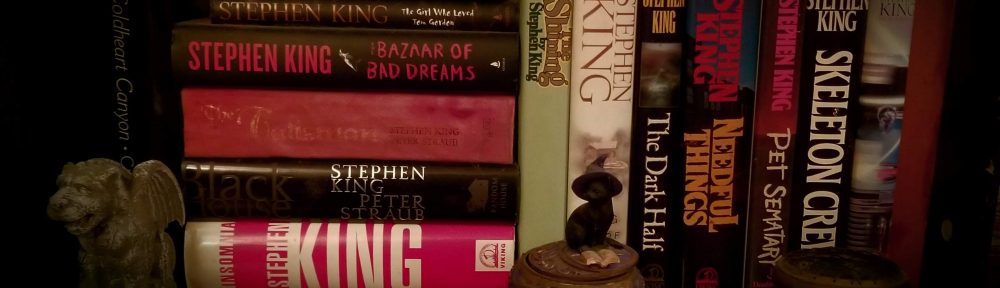
 After seeing some reviews (some good, some less than positive) about Mercy, I decided to give it a shot. It’s possible that I’m in somewhat of a minority, but I typically like most Stephen King adaptations. (In fact, the TV adaptations are my favorite things to watch over the Christmas season.) Mercy is actually loosely based on a short story that King wrote called “Gramma,” which I somewhat remember from the collection in Skeleton Crew. The gist of the story is that a single mother and her two sons move back grandma’s house to take care of her after her health has failed. There have also been some problems at the nursing home, so they will need to care for grandma at home for the rest of her life, which no one thinks will really be that long. However, grandma — Mercy (Shirley Knight) — has some dark secrets in her past that quickly come to the surface.
The film is mainly from the viewpoint of the younger son, George (Chandler Riggs). He has always had a special relationship with his grandmother and is fine with moving back to take care of her, while his older brother definitely doesn’t agree. There’s also Uncle Lanning (Mark Duplass) who is not a fan of grandma, an unrepentant alcoholic, and basically not much use for anything but scaring the pants off of kids and depressing everyone. George’s mom, Rebecca (Frances O’Connor) is torn between flirting with her old high school flame, Jim Swann (Dylan McDermott), and focusing on doing her duty for her mother. And, it isn’t until a bit into the film that we realize that grandma hasn’t always been as nice to everyone else as she was to George. In fact, grandma was a real witch. I mean, she had a creepy spell book and everything. Oh, and there was a demon involved, too, which has apparently stuck around throughout the years. In short, George ends up having to deal with a lot more than just his grandmother’s death.
The film is beautifully shot. There are a lot of gorgeous shots of the countryside, which also serve to reinforce the remote location of grandma’s house. I was especially impressed by the dual horrors in the film. Regardless of demons and witchcraft, the natural process of aging and caring for an aging family member is shown from the viewpoint of George, a child, and it is extremely terrifying to see him witnessing the changes in someone he loves and struggling to figure out how to best cope.

In the more traditional horror aspects there is much to like here. For example, the idea of selling your soul is addressed, but instead of the traditional setup a different question is implied: What happens if you sell your soul to the devil but he doesn’t reclaim it all at once? We normally think of the payment coming due at the end of life, but what if it is instead a slow, creeping erosion over time? There is menace and dread in the way that the story plays out. There is some quick, shocking horror with an especially creative suicide by axe. There is a huge, spirit wolf creature that is lurking around waiting to grab a soul. And, there is the creepy imaginary friend that George talks to on occasion.
As far as horror films go, I would have to say that the ending was less satisfying for me than I would have hoped. However, I think that the film works, and that looking back on where the story originated and the character viewpoint, the ending makes sense. Overall, there is a good story here and I would definitely recommend giving this one a watch.


 Lorelei By Starlight